
There's only so much junk we can take
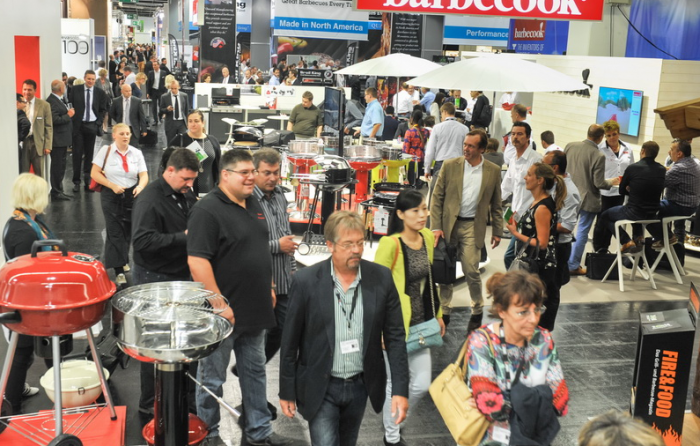
When you run a garden centre, you're always looking for new things to sell. This keeps things interesting for you and for your customers. You can find 'new' things at trade fairs, and this year we have visited fairs in Birmingham, London and Cologne. It's exciting, and these places are big. There are between three and ten halls, and each hall is about the size of an airport terminal building, divided into an endless grid of stalls. The fair we most recently attended in Cologne, for example, had over 2,000 exhibitors and 40,000 visitors. The main feeling I come away with is that there is so much stuff in the world. After a bit of thought you come to the realisation that the reason all this stuff exists in the first place is because there are so many people whose job it is to make and sell it.
 /
/
If things didn't break and they never got dated there would hardly be a need for 'new stuff' - and then manufacturers and retailers and all the other people in between would have nothing to do. Some basic garden implement like a trowel or a spade, say, can hardly go out of date. Technology cannot make it redundant after a few years and there will always be the basic need for a gardener to dig a hole. Theoretically, a well made, strong spade or trowel could be passed down from generation to generation and go on doing the same thing repeatedly. Every now and again something could get lost and, if we did something foolish like using a spade as a crowbar, we could even break it. But apart from population growth and the occasional loss or breakage, the market for many garden implements could be almost static.
When I was in my early twenties I went to Ballymaloe and did a three month course to be a chef. I went off to London with my little bag (incidentally, a 100 year old leather Gladstone bag that was still doing its job) and found myself a job in a very scary and high powered restaurant. After a day it became evident that, despite having an entire collection of lovely kitchen knives (bought in Thomas Read's of Parliament Street when it was still a cutlers), I still needed one really big knife. After consulting with my fellow chefs Rufus, Taz and Dell, who called me Paddy despite the fact that in Ireland I was generally regarded as a 'West Brit', I went to Harrods and bought myself a Wusthof knife which was big and heavy enough to chop a live lobster in half. This knife was incredibly expensive for me at the time - I know it cost over £100.00, which was probably a large chunk of my weekly income. However, I still own it and it has chopped endless quantities of food in its lifetime. I assume it will continue to do so more or less indefinitely.
The reason for telling this story is to demonstrate that, although expensive, my kitchen knife has in fact saved me money, or will at some point save me money when a cheaper knife would have fallen apart. The same can be said for my Felco secateurs, still going strong although purchased just under 20 years ago. I once borrowed a pair of secateurs that looked like Felcos - same shape and same red handles. The handle snapped almost as soon as I used them. And the same can be said for all sorts of things: the razor I use every day which belonged to my grandfather which could be 100 years old by now; the little leather Gladstone bag which I took with me on all my travels when in my twenties; or my Dad's shoes which he got made for him when he was a student and which he sends off every couple of years to get re-soled.
Quality presents a problem for the world. Quality things don't break or wear out very easily so you don't need to replace them very often. So what can the manufacturers and sellers do? They can make products which look like they are well made or they can 'innovate'. Innovation is a great smokescreen that allows everything to be 'new' time and time again. A knife is a knife. A trowel is a trowel. But how about a knife with a coloured blade? Or a gel handle? Or that is ultra-light? Or ultra heavy? Or made from porcelain? Or coated with teflon? These innovations mean that you may feel the need to buy something even though you essentially have it already. The same goes for garden tools. They can be endorsed by a celebrity gardener. They can have shock-absorbent handles. They can be made from stainless steel. They can come with a clip that makes them easy to store. They can be brightly coloured so you don't lose them. They can come with all sorts of matching tools and be presented in the shop with a little video playing on a loop. Underneath it all, though, it will be the same old junk. It will be the not-Felco secateurs that ape their design and colours. It will be made from stainless steel but poorly welded and soldered so that the head falls off the spade. It will be branded with a good old English name and have a picture of a jolly English gardener on the label but will be made in a factory in China. It will be made from stainless steel that is becoming increasingly weak as inferior quality steel gets used. Ironically, the deterioration of steel quality in cheaper garden tools (and I assume other items made from stainless steel) is because the level of recycled metal is increasing, leading to impurities, which leads to weakness, which leads to breaking, which leads to recycling, which leads to a new product, a new purchase and so on ad infinitum. Recycling isn't excatly good for the world; it is just less bad. The simple aim should be to recycle less because there is less stuff to be recycled.
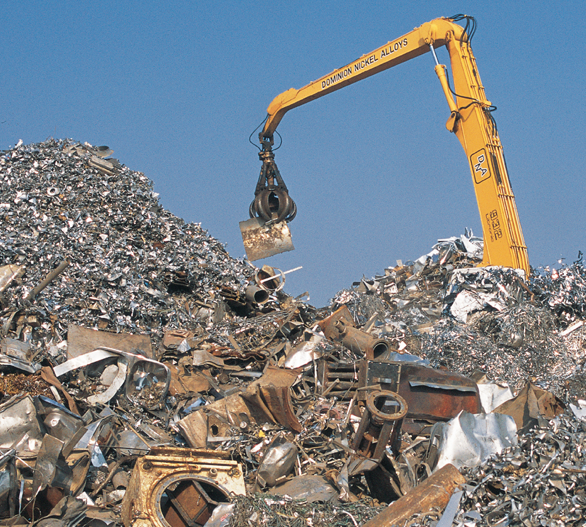
This stuff that we buy and then gets broken, or that we get bored with, goes off to be recycled and made into something new. That would be nice, but it is not the case. Things generally get downcycled, not recycled. Plastic pots get recycled and turned into something cruder such as compost bins or speed bumps. Paper gets recycled into cardboard or recycled paper, but cannot stay in the recycling loop endlessly. Plastic bottles get turned into fabrics and packing materials. But what happens to the speed bumps, fleeces and recycled board? There is an end of the line where materials are so impure that they cannot be endlessly separated. Time for landfill or incineration.
If you're a shopkeeper who relies on selling stuff it might seem foolish to point out that most purchases are of unnecessary junk. A lot of people know it already anyway. On the other hand, if you are a shopkeeper who sells a garden trowel or spade to a customer it is embarrassing to see them again a couple of weeks later when they return with it in two pieces. That is inconvenient for all concerned as well as costly for the shopkeeper or the company they bought the product from. So it is better to sell a spade, trowel or pair of secateurs that never breaks. It might cost twice as much as a cheaper version, maybe even more. But it will outlast it many times over and be better to use too.
This year when we went to the trade fair in Cologne we went with only one mission: to find things that were of the best quality. Things that would last and last and also be excellent to use. There are so many rubbishy products in the garden centre industry: hoses that twist and kink; hose fittings and reels that leak and fall apart and are horrid to use; spades and forks that snap; trowels whose handles fall off; secateurs that don't cut properly; loppers that snap; watering cans that dribble; gloves that go stiff, don't fit and wear out quickly; digging tools that are so light that they bounce off the ground and cannot actually dig; furniture that falls apart and rusts in the Irish climate... the list could go on and on and doesn't include garden chemicals. Gardens and chemicals is one of the most unpleasant and dangerous combinations that exists. Garden centres devote a whole section to various forms of poison: poison for plants (weedkiller), poison for the soil (weedkiller and synthetic fertilisers), poison for animals (pesticides) and poisons for moulds (fungicides). All of these, collectively and individually, are also poisons for water, wildlife, the atmosphere and of course ourselves. Most of all they are entirely unnecessary and they serve no purpose other than to be part of the consumption loop, with the added sting of poisoning ourselves and our world.
We came away from the trade fair in Cologne with some good finds. You have to develop a fairly strict set of rules for yourself or you would be there for days. We found garden furniture that is designed and made in Italy (Ethimo); it is beautifully made, looks fabulous and will last in the Irish climate. We found a German company making metal hose fittings that work nicely and will last forever; we have ordered in a vast selection of garden hand tools from DeWit; made in Holland from carbon steel and ash, these are often described as the best gardening tools in the world; we already stock Felco cutting tools from Switzerland; Burgon and Ball topiary shears, still made in Sheffield; the last ever English-made Bulldog spades (the forge in Wigan recently closed, having operated since the 1780s); Haws watering cans; big wide American brooms, corn brooms and dustpans... lots of stuff that we don't think is junk. It will be more expensive than what other shops sell, but better value.