
Strimmer and mower damage to trees and shrubs
The base of trees and shrubs are very vulnerable to damage, most often caused by those who are charged with looking after them! This photo shows the damage caused to Cherry laurel plants (Prunus lauroceracus) by a strimmer. The entire hedge was yellowing and unhealthy, and had to be removed in its entirety. Water is brought to the upper part of the plant via the bark, so if this is damaged, the flow of nutrients and water is compromosed. Secondly, when trees or shrubs get damaged in this way, infection or mould can enter the plant and it lead to its premature demise. It is very important, therefore, to protect the base of trees and shrubs from 'mechanical' damage, and also to have an environment free fromgrass and weeds, which will sap nutrients to themselves and away from the tree.
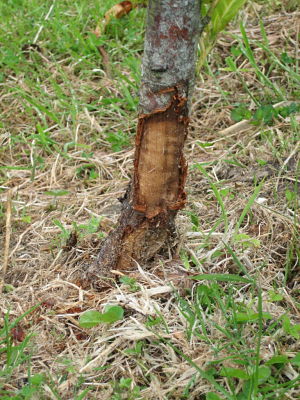
Cherry laurel, damage by strimmer.
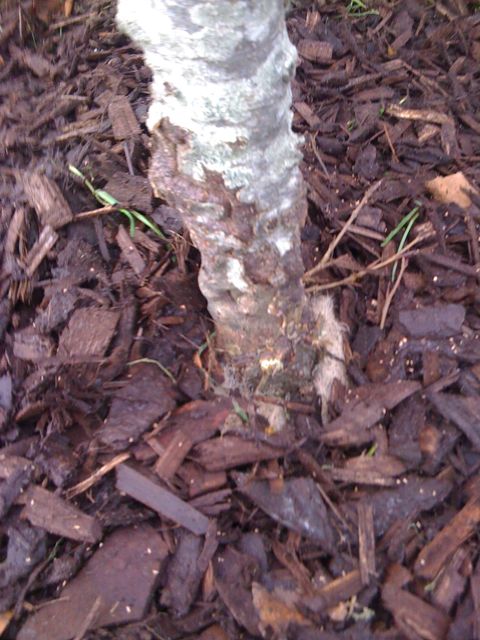
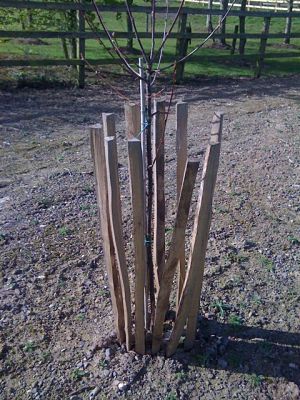
A newly planted tree, protected from rabbits, strimmers and mowers with chestnut paling. Used in a garden designed and planted by us in North County Dublin.
Solutions:
1) Never use a strimmer around the base of a tree, and never cut too close with a mower as the edge of the deck can be sharp.
2) Make sure that for the first few years of a tree or shrubs life, they are growing in a relatively grass-and-weed free place, by pulling long grass and big weeds by hand.
3) Ideally, have mulch made of bark, compost or straw at the base of trees to keep away grass and weeds (these plats also intercept the nutrients from getting to the tree, and slow down its growth.
4) Invert the sod when planting, if there is any. Plant the tree into grass and weed-free soil, and use a mulch mat covered in bark or pebbles. This will ensure that the base of the tree is weed-free and gets off to an andamaged, healthy start.
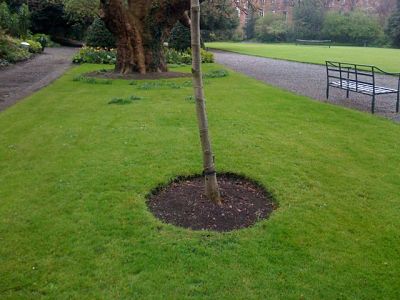
A Plane tree in Dublin's Fitzwilliam Square. Note the exposed root flare (good) and the totally weed-free base, making mowing easy. Even the large tree in the background is protected (Note: doing this with weedkillers is a very ugly way of keeping down weeds, and leads to a build-up of slimy, dead soil.)