Why we should be buying Irish plants

Bord na Mona, selling off the last our peat bogs.
Everything we buy has been bought by someone else. In other words, when you buy something from a shop, the shopkeeper bought what you bought. What the shopkeeper bought was probably, in turn, bought by someone else, and on and on down the line. This is the 'value chain'. For example, when you buy a plant in your local garden centre - say a heather - that plant will have been bought from an Irish distributor who delivered it to the shop. The distributor would have bought it from a wholesaler, normally in Holland. The wholesaler would have bought it from the grower, who may only grow heathers and who could produce millions of plants per year. The grower may have bought tiny plants from another grower who specialises in 'plugs' or young plants, and have grown the plant into a saleable size. The grower buys plastic pots from one supplier, plastic trays from another, compost from a different supplier and fertiliser and chemicals from yet another. Even further down the line, the plug supplier may have bought really tiny plants from a micropropagation company that grows plants from tissue culture. And then the plant ends up in your garden or a pot by your door.
Each step performs a valuable service and has a charge. The shop puts it on display, presents it nicely, hopes that it will be bought, explains it to customers and presents it with other plants. The Irish distributor takes it in vans around the country and sells small amounts of plants to lots of different shops, something one of the giant trucks from Holland could never do. The Irish distributor offers credit to the shopkeeper too, which would not be available to them if they bought from the wholsaler directly. The wholesaler in Holland works from dawn every day, buying plants in huge numbers at 'trolley auctions' which are constantly fed by trolleys of plants coming from the growers. They divide everything up into thousands of different combinations so that every town in every country has a constant supply of plants. The grower invests their time and skill into growing a plant that someone will want to buy.
Going to a horticultural trade fair such as IPM in Essen - which is the world's largest, with 57,000 visitors and almost 1,600 exhibitors - makes you realise what a huge enterprise the entire 'value chain' of horticulture is. There are dozens of producers of automated potting machines, Heath-Robinson style machines full of conveyor belts, chutes and robotic arms. The manufacturers of plastic plant pots and trays are battling it out and there are hundreds of 'innovations' in fertilisers, pesticides and growing media. There are halls full of nurseries, each with photos of rows of plants stretching into the distance. The Dutch have always had the lead in plant production, and their distribution skills makes ordering plants from Holland very easy. The nurseries have excellent online ordering systems, and they join up with other nurseries so that their offering is larger, ordering is easier and distribution is simpler; but it's also pretty easy to order from Italy, Belgium, France or Germany. The Italian and Spanish growers have olives, bays, cypresses: all those plants that love sun and heat and are in leaf all year round. With a few clicks and a phone call you can have them in Ireland just a few days later.
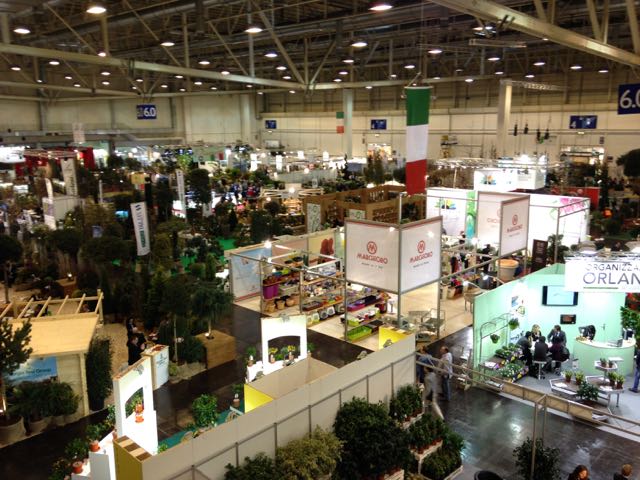
One corner of one hall (of 11) at IPM Essen. You need a lot of stamina for these shows!
Coming from Ireland to a trade fair like this makes you realise just how small and 'on the edge' we are here. It also made me very aware of the nurseries that we have in Ireland and how, with this giant competitor right next door, they have done their very best to survive over the last few difficult years. It also made me realise how good they are. The plant lists from Irish nurseries offer a big array of plants, many of which grow better in our climate than they would on mainland Europe. Our mild winters, unpredicatble late frosts and wet summers make us a completely different environment for plants, and our precious growers know more about this than anyone else. Plants that come from New Zealand, South Africa, Australia and Chile (to name just a few places) grow better here than they would in most other places in Europe. We can also grow a huge array of plants from China, Japan, Taiwan and Korea. Plants from West Coast USA thrive here - think of the Sitka spruce, the most planted forestry tree here - as do some East Coast U.S. plants. In other words, our climate is different from mainland Europe, which itself has a big diversity of climates. Think of a Photinia 'Red Robin' tree growing happily in a sunny field near Lucca, Italy, getting used to warm weather, surrounded by its Photinia friends for miles around. Put it on a truck and send it to Ireland where it has water thrown at it and is left in a cold gale for weeks on end: it might not be happy about that.
Most Irish nurseries don't have elaborate ordering systems. It's still done by phone calls or filling in Excel sheets. But apart from that, it's pretty straightforward. What's more, the grower is normally there to answer questions or offer advice, willing to try new things if you ask them to. They are not growing things by the thousand; sometimes they grow a few dozen of this or that to keep their range full and interesting. They have seen what works and what doesn't work and they know more about what plants work well in Ireland than anyone else. I have come back from Essen with a greater resolve than ever to support Irish growers. The quality of Irish plants is superb and the plants are familiar with our unpredictable weather. The selection on offer makes sense for our climate. But most importantly, so much of the 'value chain' takes place in this country. The nursery staff are kept in employment. Local distributors are kept busy. Tax returns are increased and social welfare payments are decreased. A long-standing, knowledge-based industry is maintained. Fuel consumption from distribution is less. The gap between the customer and the producer is reduced in all senses. Finally, Irish plants are surpisingly good value. Given the small size of the market and the economies of scale, as well as the particularly high quality of the plants, Irish-grown plants are cheaper than many of what I saw at Essen. It is hard to produce bedding plants such as cyclamens and heathers at very low prices, but for perennials, trees and shrubs our prices compare very favourably.
It was interesting, but the only Irish stand I saw at IPM Essen was Bord na Mona. They had a prominent stand in one of the main thoroughfares, promoting Irish peat as a potting medium: not for domestic use but for commercial use in nurseries. This was despressing, given the irreplaceable value of our bogs and the fact that Bord na Mona has been responsible for their demise over many decades. The video they had seemed particularly crass: huge machines driving over a lovely Irish landscape, churning it up for what.... little heather plants, which is what was there in the first place.
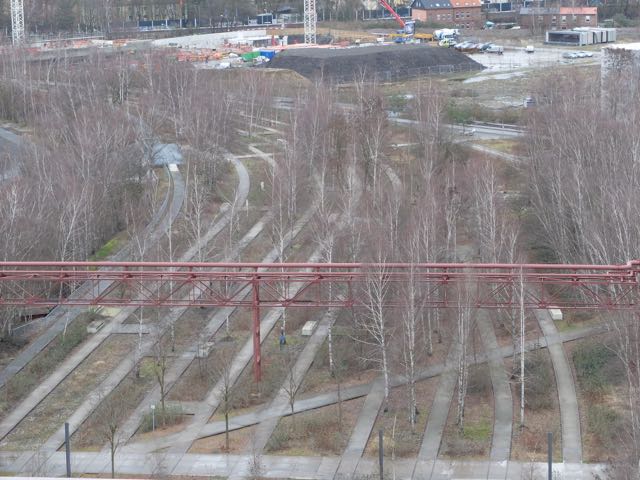
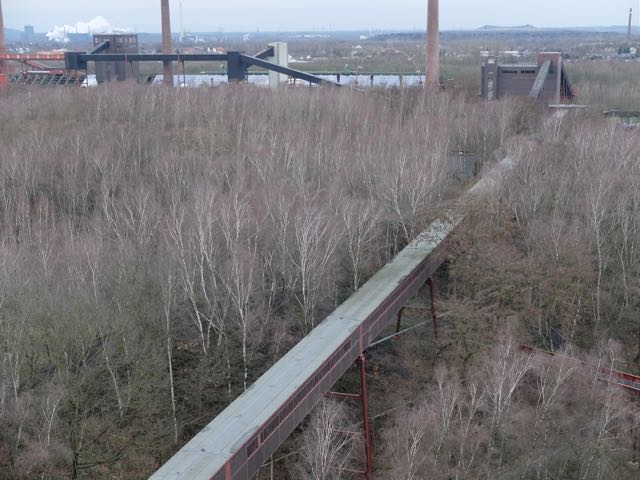
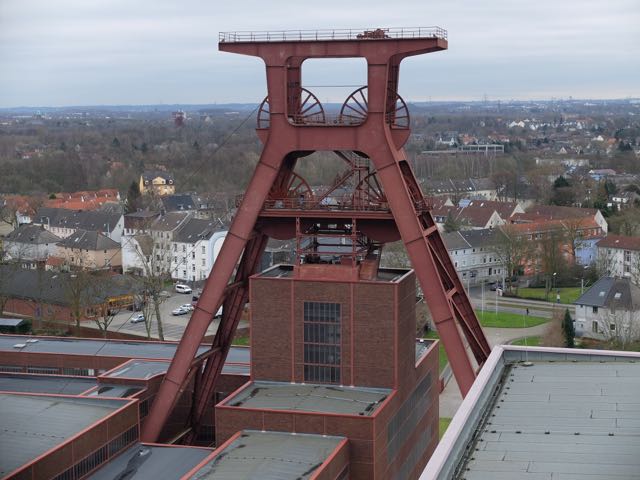
Nature wins in the end: this is the view from the top of Zollverein, a giant former colliery in the Ruhr, outside Essen, now the Ruhr Museum. This huge inudstrial complex is now a Unesco heritage site and it has been skilfully 'rewilded'.
NOTE: In Howbert & Mays, we do buy plants from abroad. There are some things which we just cannot get from Irish growers, such as house plants or topiary bay trees. It would be difficult for Irish growers to specialise in something that has a very limited home market. But wherever possible (which is about 95% of our outdoor plants, including trees, shrubs, climbers, perennials, grasses etc) they are grown here in Ireland.